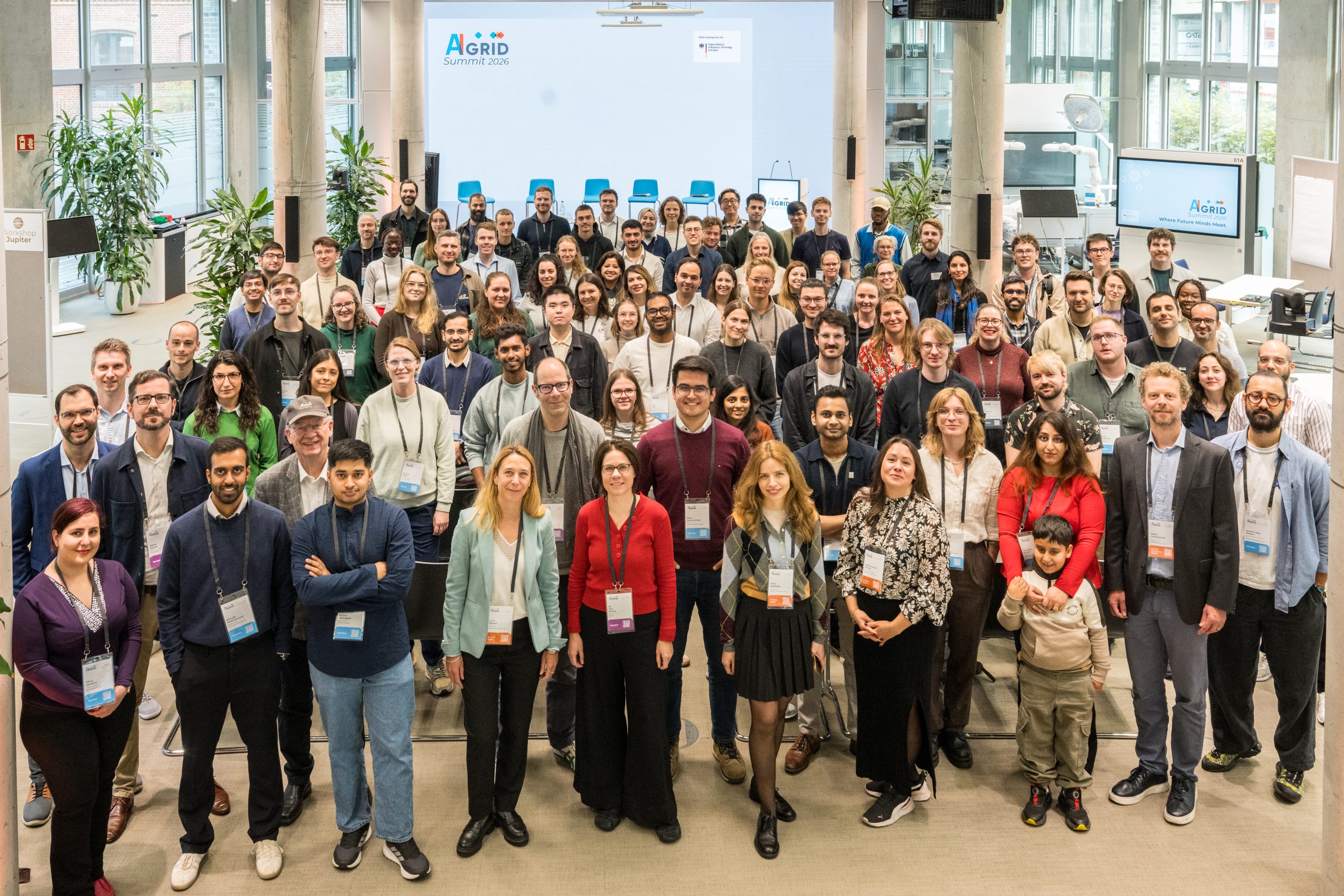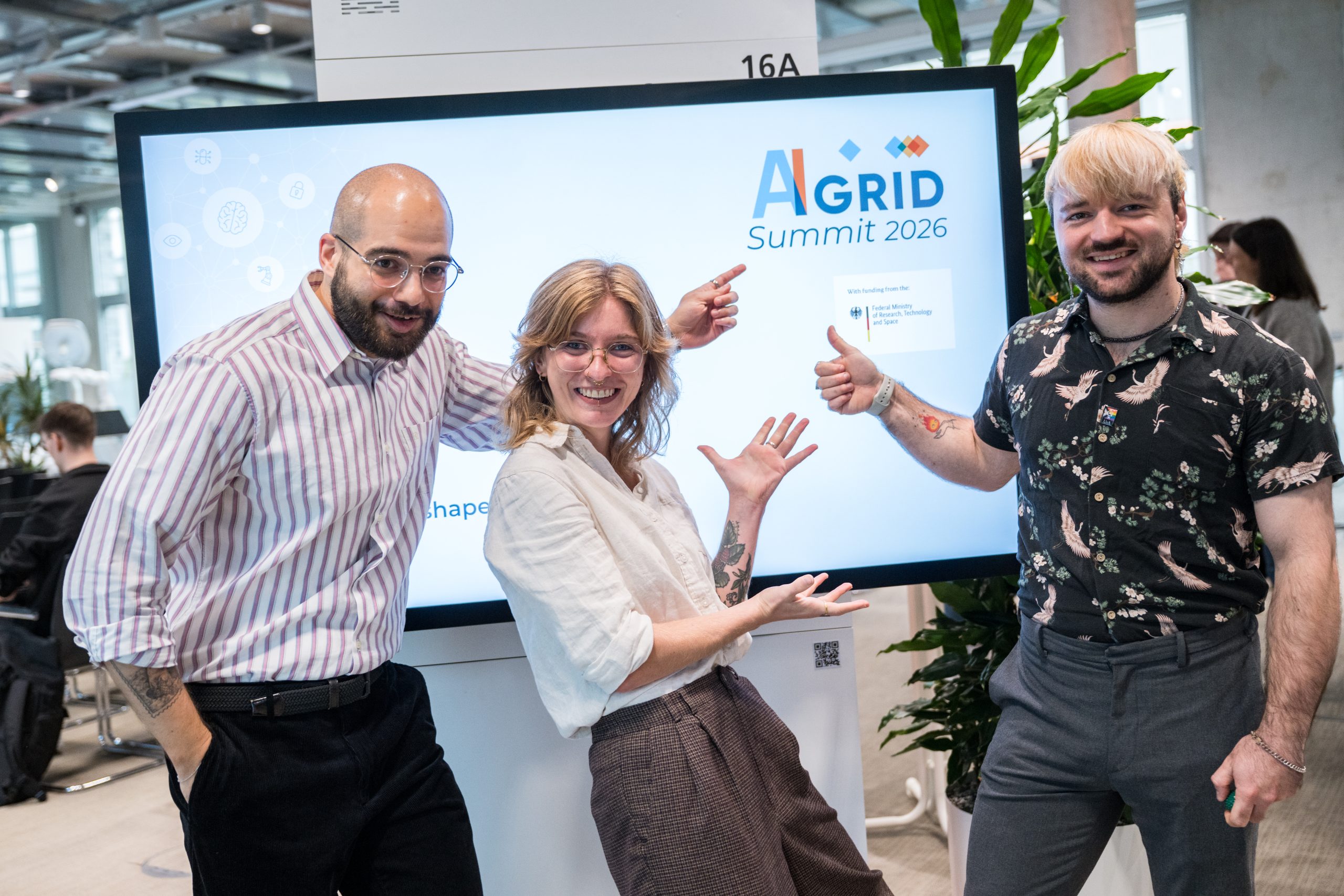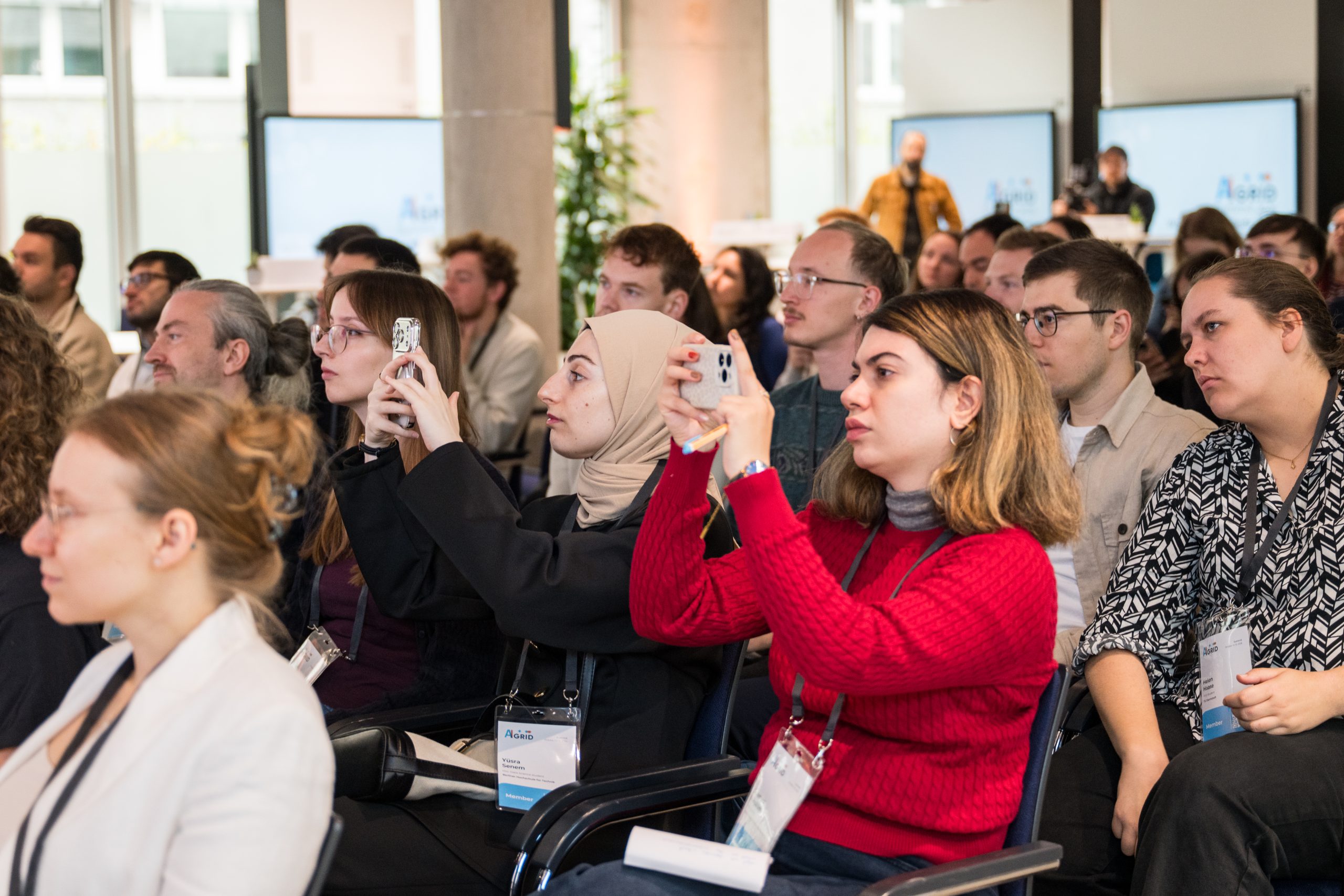
Laure Poirson, AI Grid Project Lead, sums it up: “Germany has outstanding AI research. It’s crucial to provide young researchers with the networks and support they need early on so that their scientific findings can lead to innovations. AI Grid sees itself as a bridge between research, business, and entrepreneurship.” That’s why many of the summit’s sessions focused on career development and professional prospects. Translated with DeepL.com (free version)
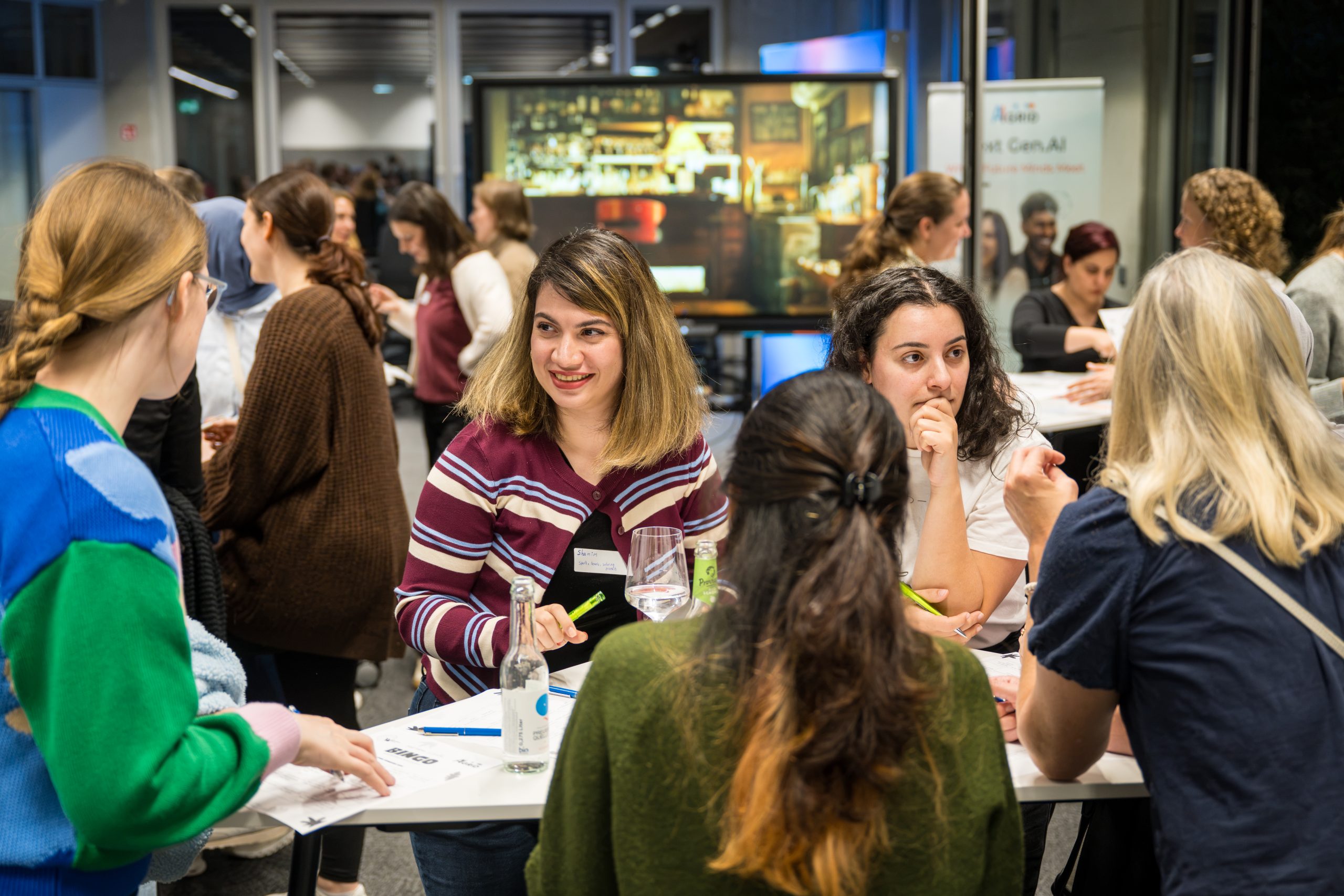
Pre-Event Evening: Networking with Women in AI
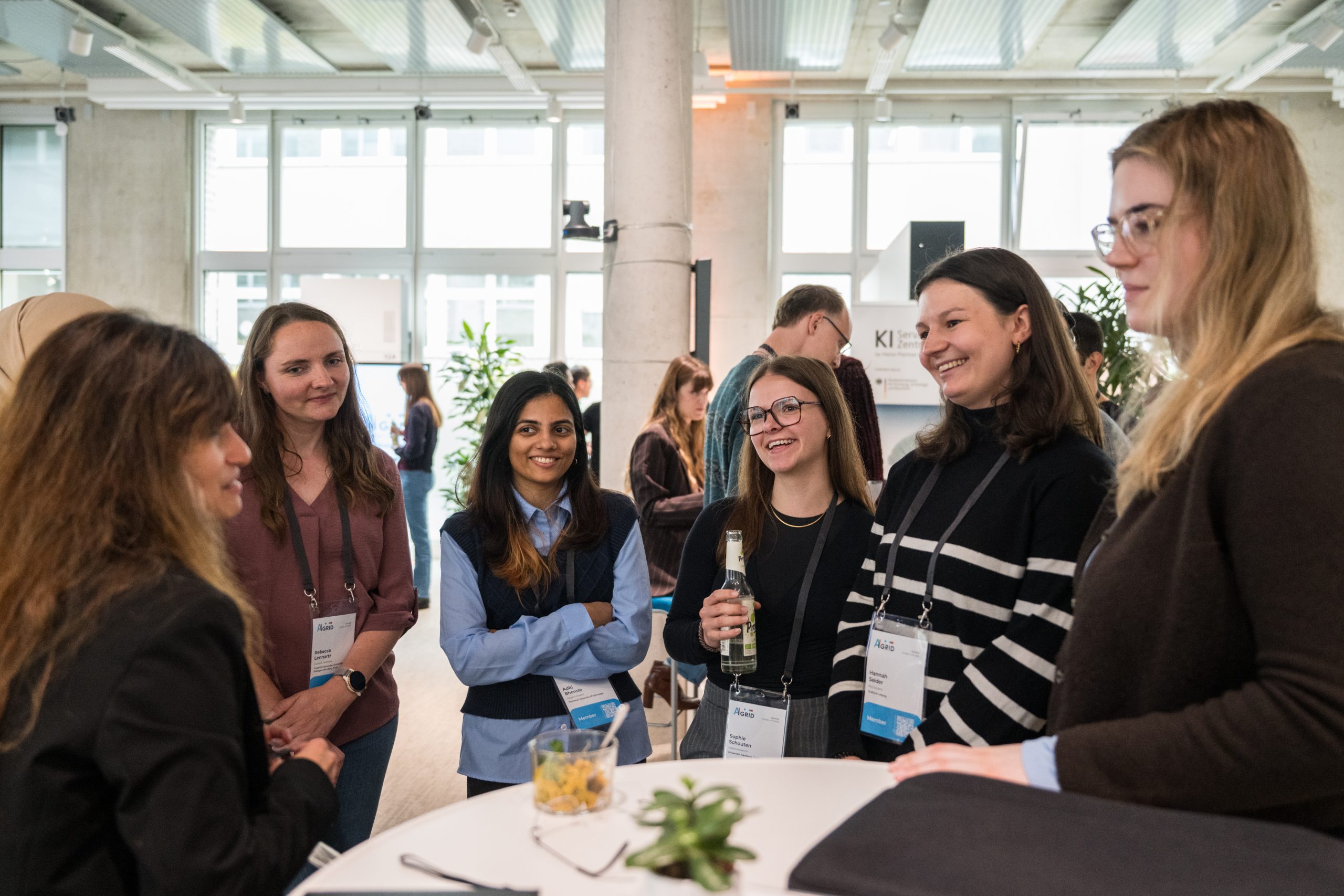
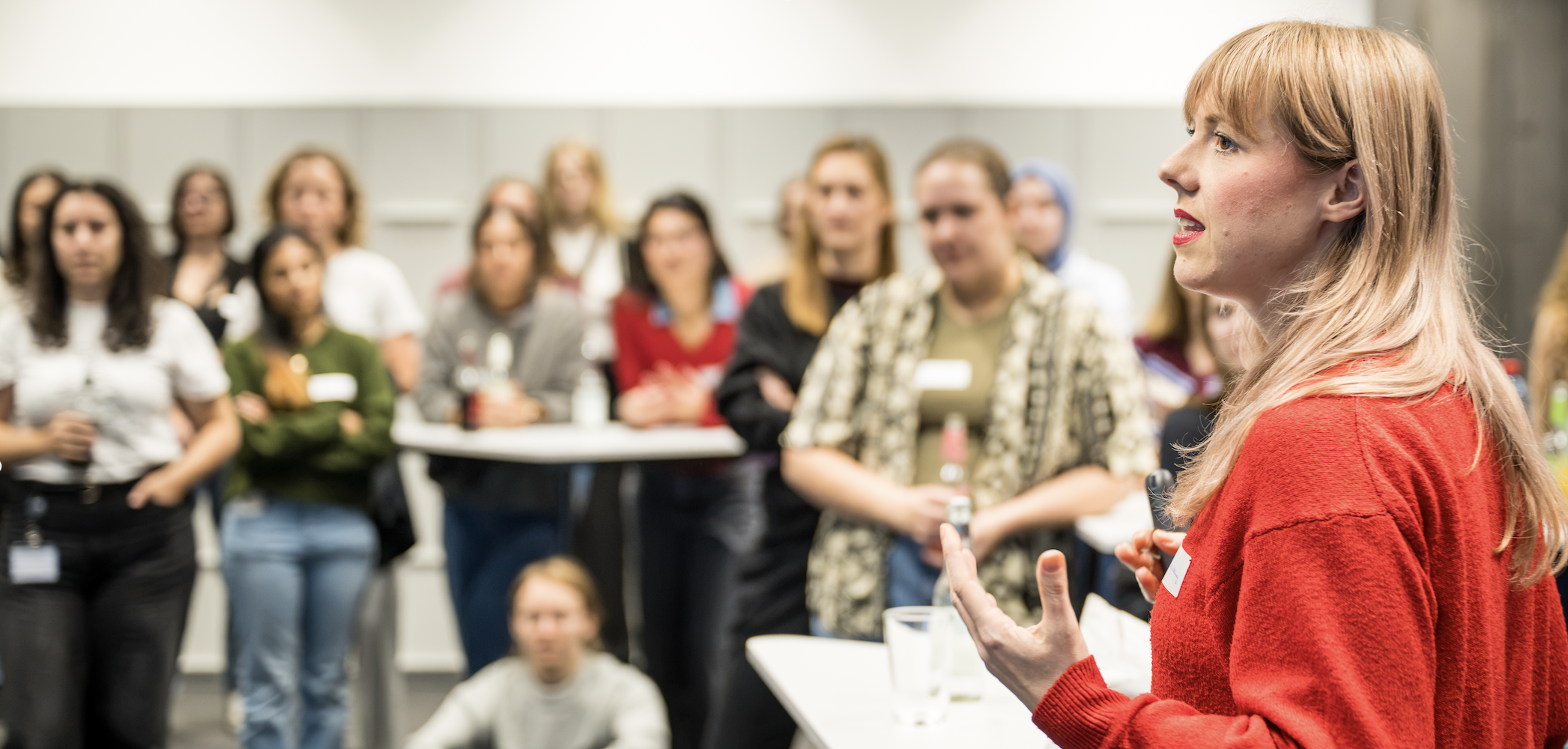
Supporting women in AI is one of AI Grid’s top priorities. On the eve of the summit, October 13, a networking evening was held in collaboration with Women in AI. In a warm and welcoming evening setting, the event provided a great introduction and fostered new connections among women. Laure Poirson and Jenny Gyurakovics (Women in AI Germany, Berlin Chapter) kicked off the evening. Dr. Maria Börner gave a presentation on “How to Use LinkedIn to Boost Your Career,” before Networking Bingo and casual conversations took center stage for the rest of the evening.
Summit Day 1: Research on the Path to Practical Application
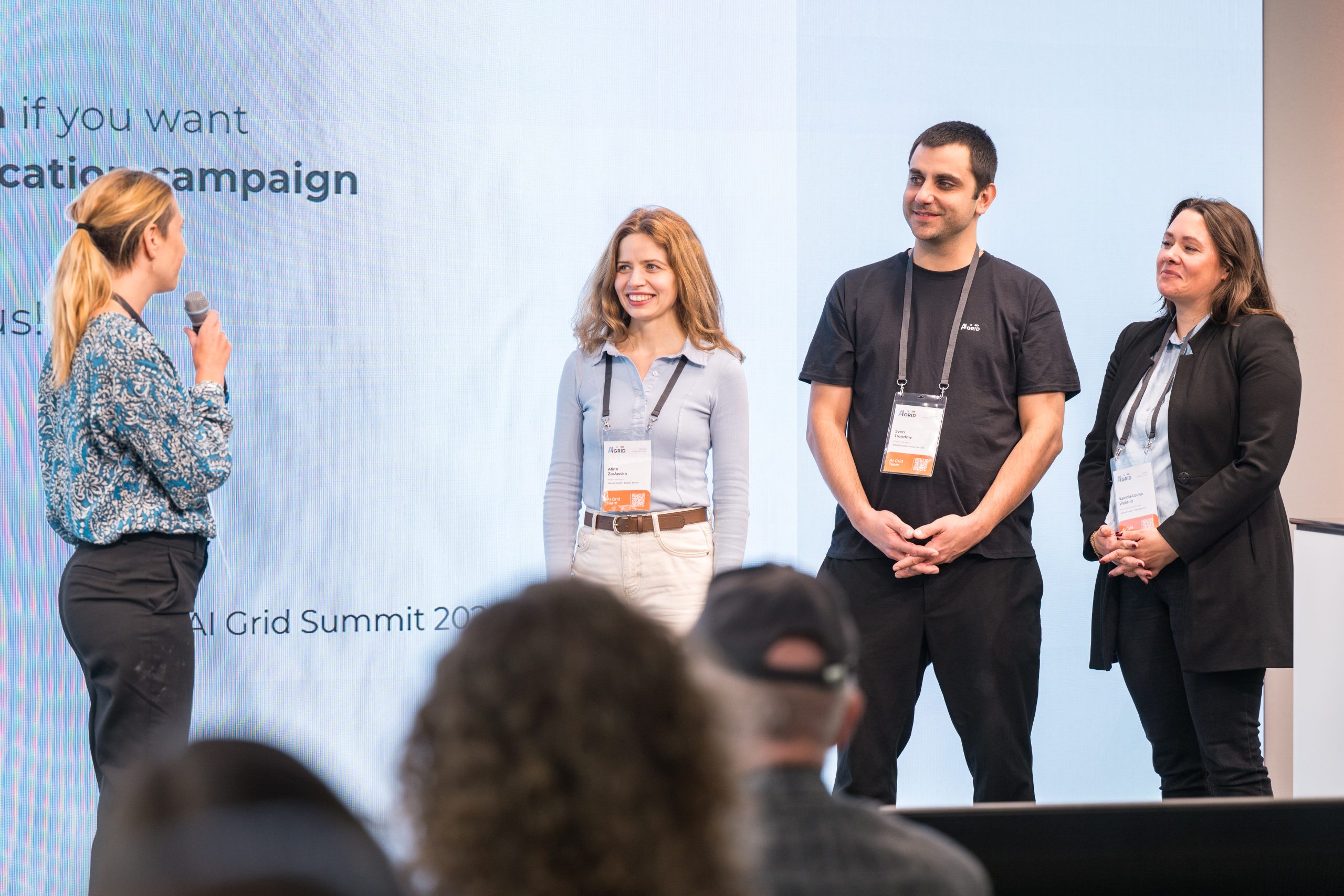
Laure Poirson together with Prof. Dr. Wolfgang Wahlster (AI Grid, DFKI), opened the first day. In the “Member Spotlights” session titled “Impact Stories,” young researchers from the community shared insights into their projects and experiences with AI Grid. Speakers included Sönke Erdmann (Master’s student and independent researcher, University of Amsterdam / University of Potsdam), Teresa Kutzner (PhD Candidate, Stuttgart Media University), Michael Krah (Researcher, OFFIS – Institute for Information Technology), Erik Voigt (PhD Candidate, Otto Friedrich University of Bamberg) and Milan Ferus-Comelo (Master's student, Karlsruhe Institute of Technology / Co-Founder of SmartCart).
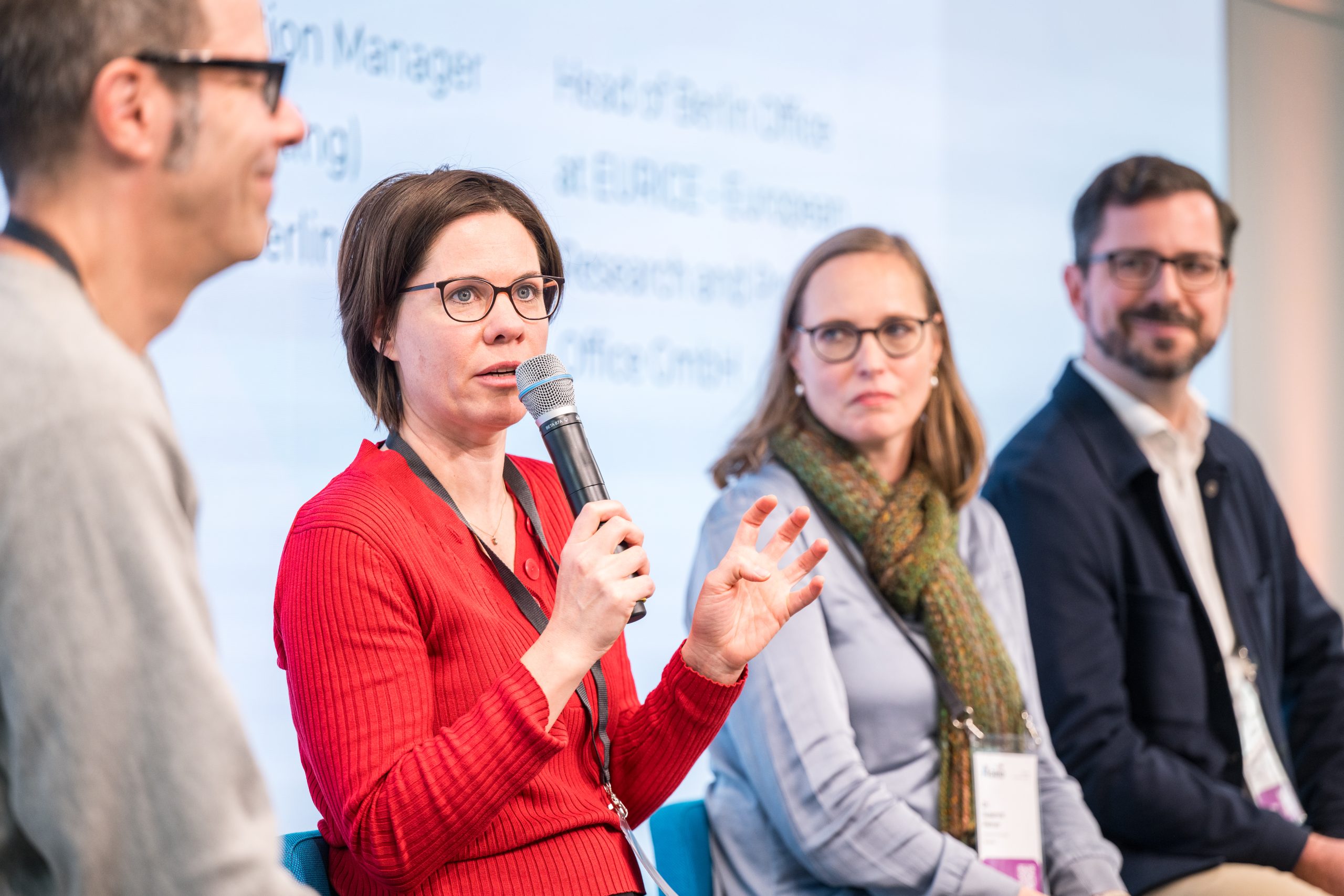
Following an opening presentation by Dr. Tina Klüwer (AI NATION), Dr. Susanne Perner (TU Berlin) and Jakob Haardt (EURICEcontinued the discussion in the “From Lab to Real-World Applications” fishbowl session. The session was moderated by Dr. Aljoscha Burchardt (DFKI). Dr. Tina Klüwer made it clear: “The transfer of research into practice worries me and keeps me up at night. It simply takes too long. […] What we need are more spin-offs from universities and a dialogue between society, companies, and the business community so that startups can be successful in the long term.”
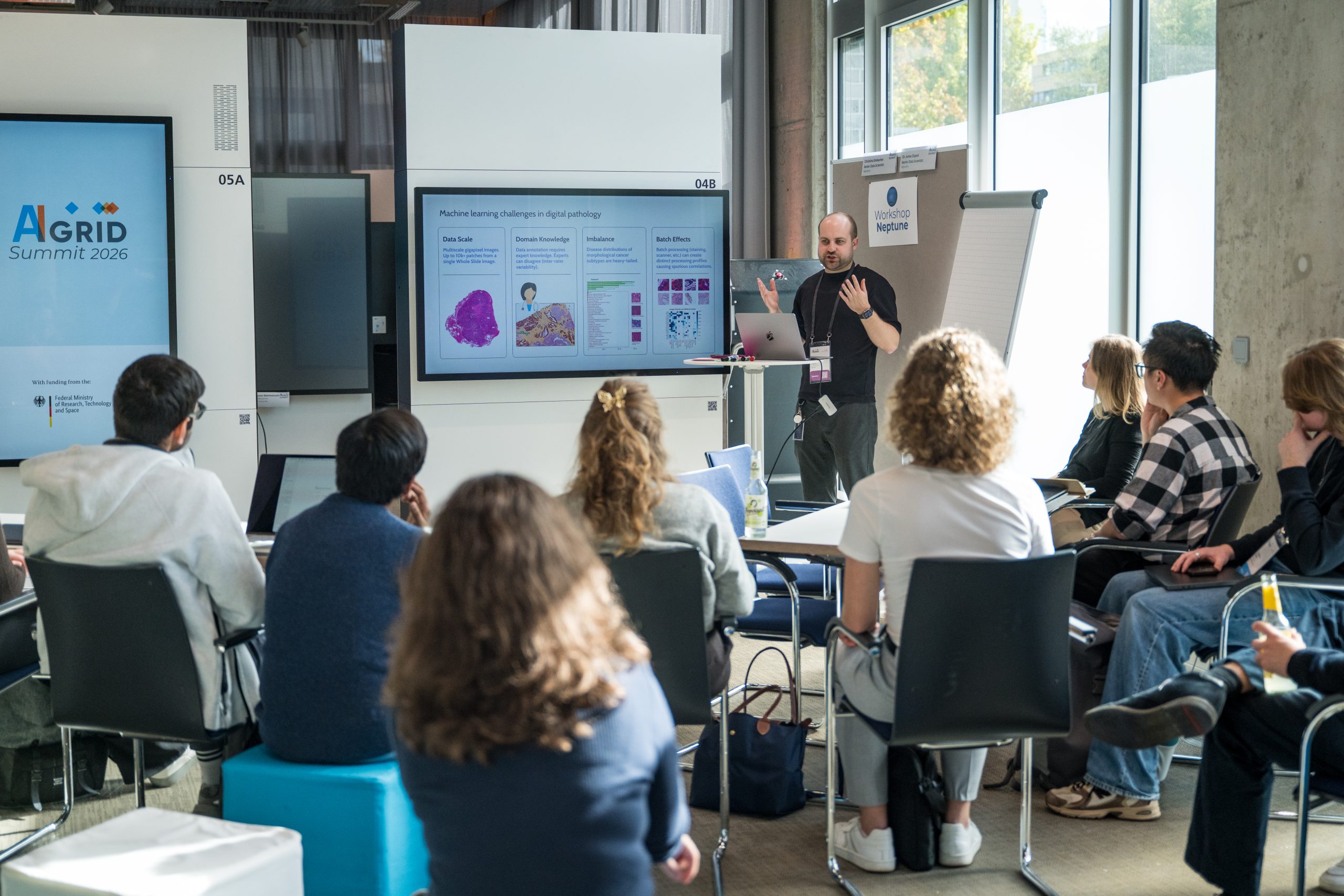
In the afternoon, the session turned into a hands-on workshop. During the Applied AI workshops, participants exchanged ideas with Manuel Treutlein (Netze BW GmbH/KIT), Johannes Zimmer (lytris), Abdulrahman Ulfat (Open Prometheus) as well as Christina Embacher and Dr. Jonas Dippel (Aignostics).
The Science Deep Dives covered the following topics:
- Responsible AI with Prof. Birte Platow and Dr. Elke Witt (AI Competence Centers)
- Small Language Models with Dr. Philippe Thomas (DFKI)
- Retrieval-Augmented Generation with Felix Boelter and Mario Tormo Romero (HPI)
- Health Data with Dennis Fast (AI Grid Member, BHT) and Carolin Cissée (AI Grid Member, MHH)
On the evening of the first day, the focus was on socializing: catching up with old friends, meeting new people, and a PowerPoint karaoke session.
Summit Day 2: Shaping Your Own Career
Laure Poirson opened the second day with the question, “What does a fulfilling career in AI look like?”
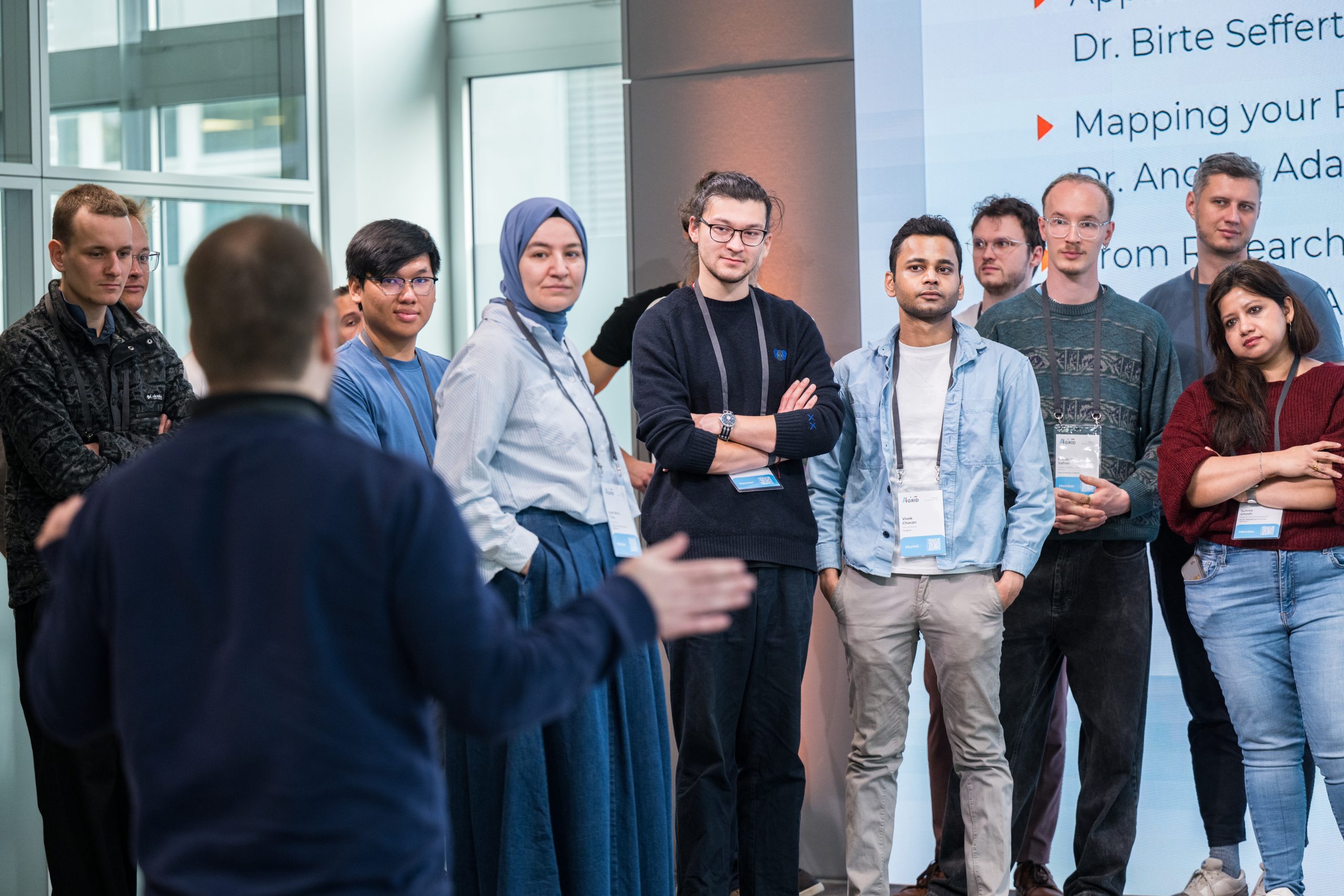
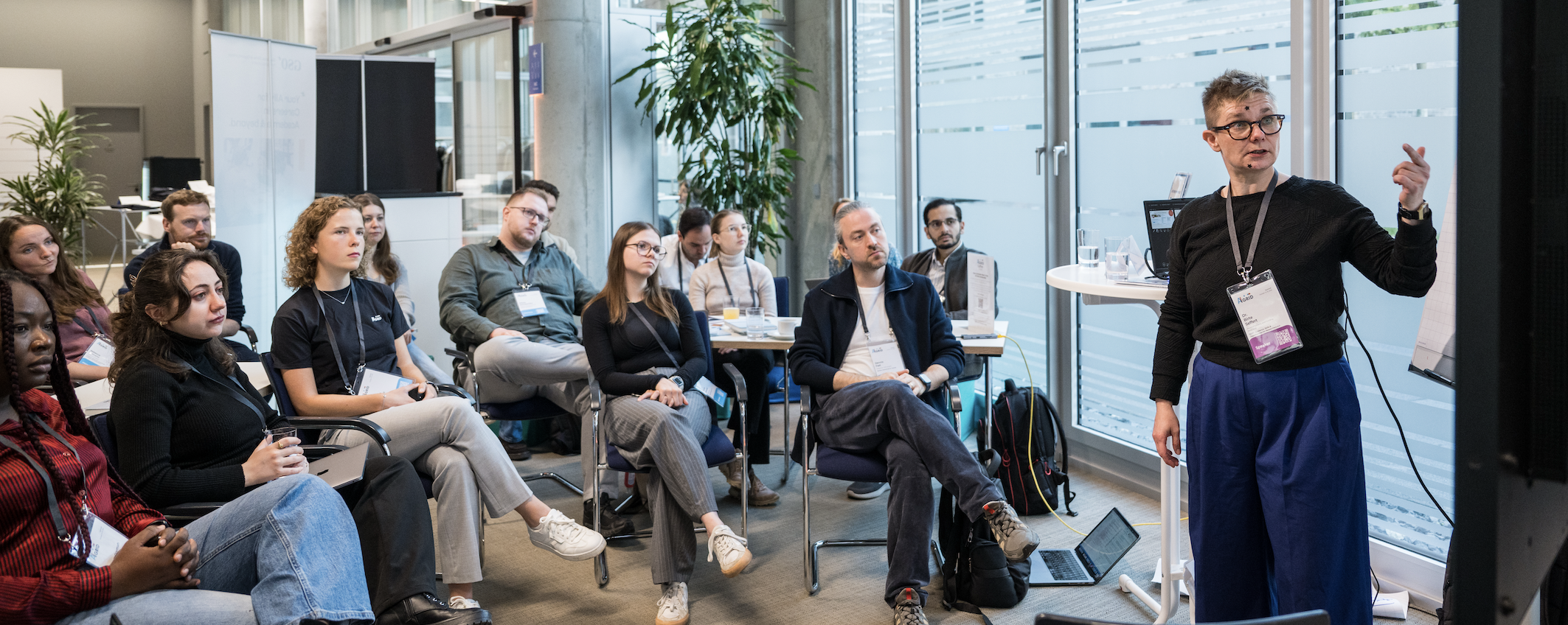
Dr. Birte Seffert (GSO) encouraged participants to reflect on their own values and to visualize what their future workday might look like in concrete terms. Her advice: Take the time to make well-informed decisions. The European Competence Framework for Researchers can help you identify and highlight your own strengths.
The “Boost Your Career” workshops focused on job applications, transferable skills, academic careers, and taking the leap into entrepreneurship. The workshop on CV writing with Dr. Maria Börner and Jenny Gyurakovics (Women in AI) demonstrated how research skills can be applied to other industries. The Application Check with Dr. Birte Seffert (GSO) addressed the question of how to stand out among 100 applications. Andrea Adams (TU Berlin) guided participants through academic career paths, while Koral Nuñez (AI NATION) and Koral Nuñez (AI NATION) as well as Philipp Heinicke (Science & Startups) outlined the path from research to starting a business.
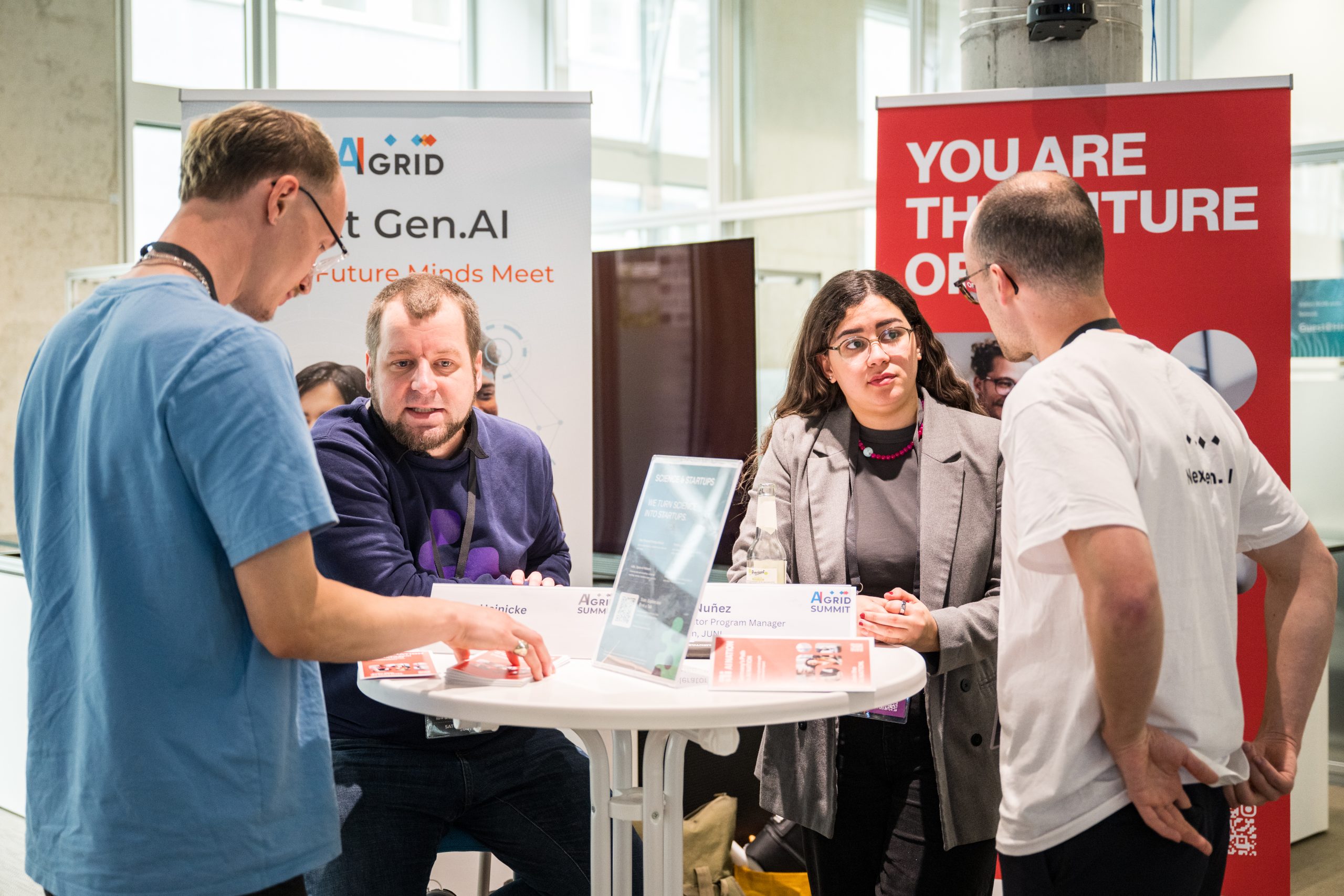
At the Career & Opportunities Marketplace, questions turned into conversations. At the Start-up, Public/Policy, Industry, Academia, and Research Funding stations, participants were able to speak directly with representatives from academia, industry, and start-ups, including Jakob Tesch (Gretchen AI), Koral Nuñez (AI NATION), Abdulrahman Ulfat (Open Prometheus), Patrick Gilroy (TÜV-Verband), Dr. Madhura Thosar (JungHeinrich), Frederic Voigt (M.M.Warburg & CO), Kerstin Lenhof (Universitätsmedizin Göttingen & CAIMed), Dr. Birte Seffert and Tobias Renner (GSO), Mareike Grau (AI Service Center Berlin-Brandenburg, HPI), Carsten Walbiner (DAAD) as well as Michael Samjatin (HHI) and Myron Sydorov (BRISA).
From Research to a Career
The Summit demonstrated that excellence alone is not enough. Research only becomes effective when it connects with people who ask questions, blaze new trails, and trust one another to take the next step. This is precisely where we see our mission at AI Grid: to support our members not only in their research, but also on their path toward their professional future. After all, talent flourishes most where research, career, and community come together.