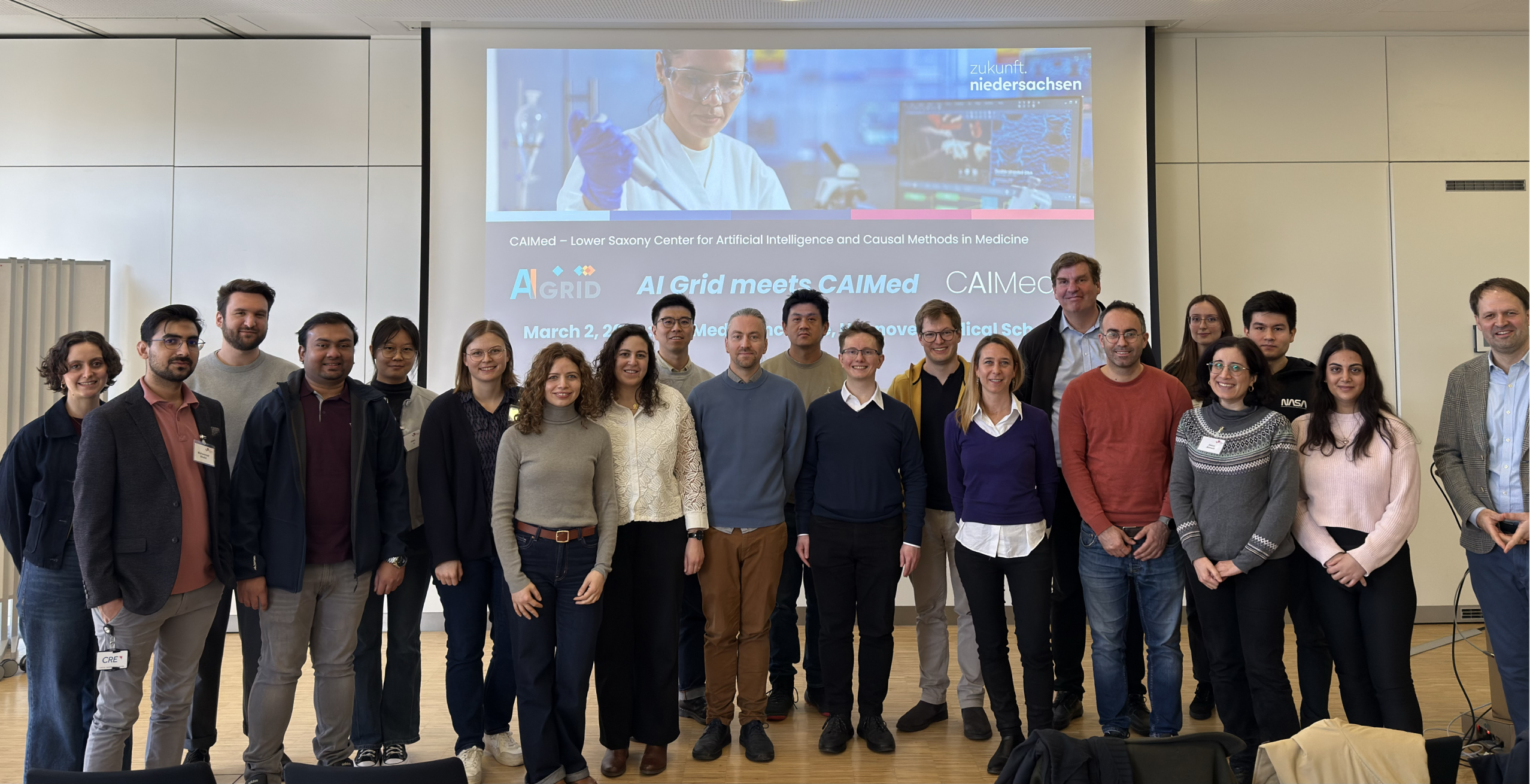
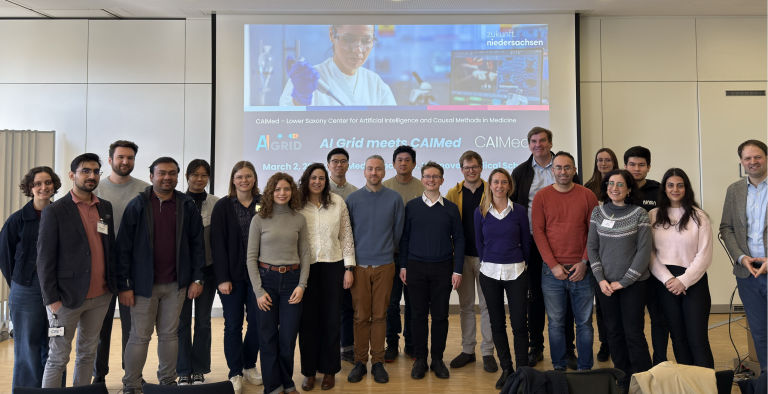
The event took place at the Clinical Research Center Hannover and focused on the theme „Clinical Decision Support and Its Statistical Evaluation: What, How, and Why?“The aim of the meeting was to bring together researchers working on the methodological and clinical foundations of medical AI.
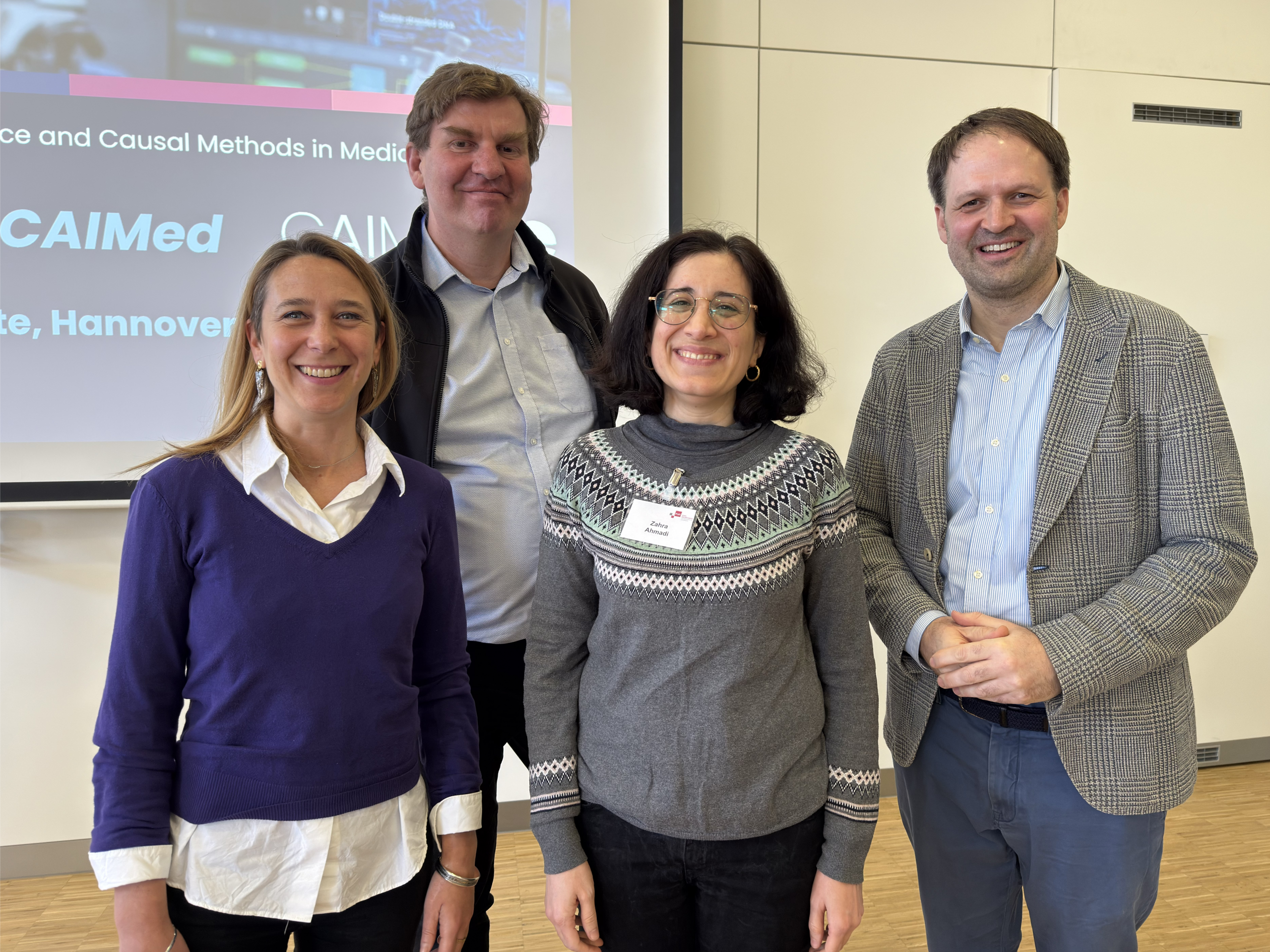
The participation of AI Grid was made possible in particular through the support of Dr. Johannes Winter, Director of CAIMed and member of the AI Grid Executive Board, as well as Dr. Zahra Ahmadi, Junior Group Lead EMuLe & CAIMed at Peter L. Reichertz-Institut für Medizinische Informatik (PLRI). Their commitment played a key role in fostering scientific exchange.
Scientific Dialogue as a Central Focus
The visit to Hanover placed a strong emphasis on interdisciplinary collaboration within the medical AI community. The organizers provided additional space for in-depth scientific discussion among AI Grid members by extending the morning schedule. This created an environment conducive to focused exchange and collective engagement with current research questions and methodological challenges.
Scientific Insights in the Morning Session
The morning session offered insights into several key research directions in medical AI.
A particular highlight was the presentation on Neurosymbolic AI by Prof. Dr. Sören Auer; Director of TIB – Leibniz Information Centre for Science and Technology and University Library and University Library, and head of the research group Data Science and Digital Libraries. The talk introduced approaches that combine neural learning methods with symbolic reasoning in order to improve interpretability and enable knowledge-based applications.
Further discussions focused on foundation models for biological data analysis. Researchers from the L3S Research Center presented work on single-cell representation learning, which combines the modeling of cellular heterogeneity with scalable analysis pipelines.
There was also strong interest in generative models for drug discovery. Presentations explored reinforcement learning–optimized diffusion models for molecular design and discussed how generative processes can be deliberately guided toward chemically relevant regions with clinical significance.
Another contribution on Cross-Modal Domain Generalization in Multimodal Learning was presented by Souptik Sen from Peter L. Reichertz Institut für Medizinische Informatik (PLRI) . The methodological focus was on strategies to improve the generalization capability of multimodal models across different clinical domains.
The presentation MIMIC Pitfalls and Challenges for Multimodal Learning from Carolin Cissee, research associate at the Peter L. Reichertz Institut, also addressed key challenges in using the clinical dataset MIMIC-IV for multimodal learning approaches, particularly in the tension between data availability, methodology, and clinical relevance.
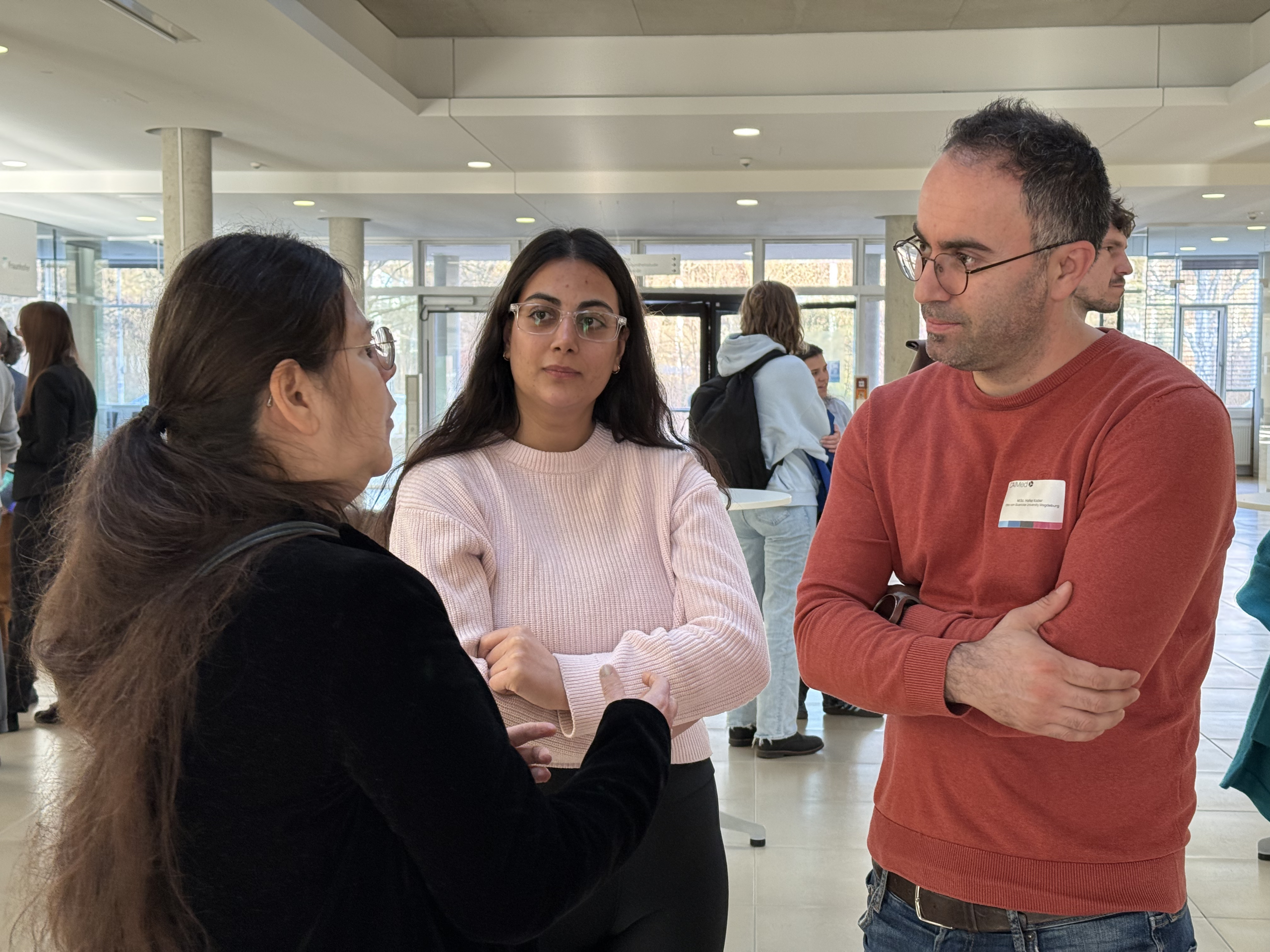
After each session, AI Grid members actively participated in the scientific dialogue, asking follow-up questions and contributing their own perspectives, thereby strengthening the interactive character of the format.
Clinical Decision Support and Responsible AI in the Afternoon
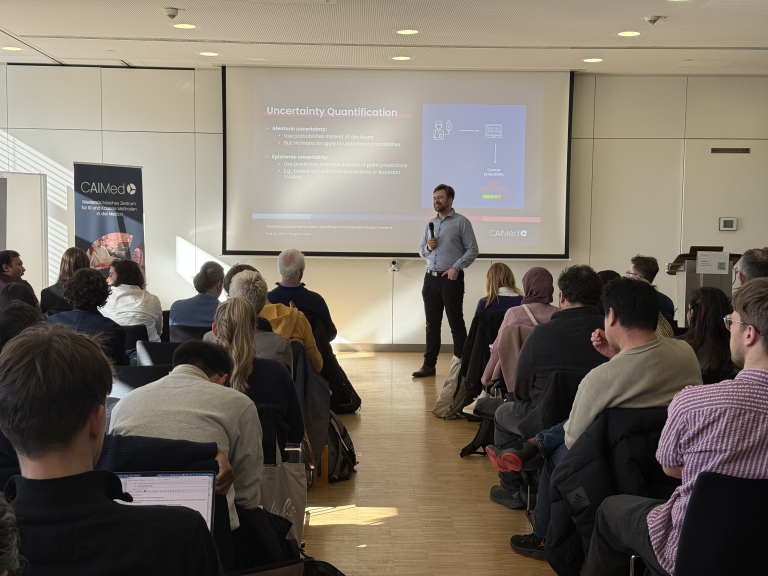
The meetup continued in the afternoon as part of the official program. Following a joint get-together and welcome of the participants, Laure Poirson, Team Lead at AI Grid, presented the vision and scientific activities of AI Grid and positioned the community within the broader research ecosystem.
The first expert talk was delivered by Dr. Julia Böhnke, research associate at the University of Münster, who presented work on estimating diagnostic test accuracy in longitudinal settings within the framework of the ELISE-Projekts. The presentation discussed statistical challenges in evaluating clinical diagnostic systems over time.
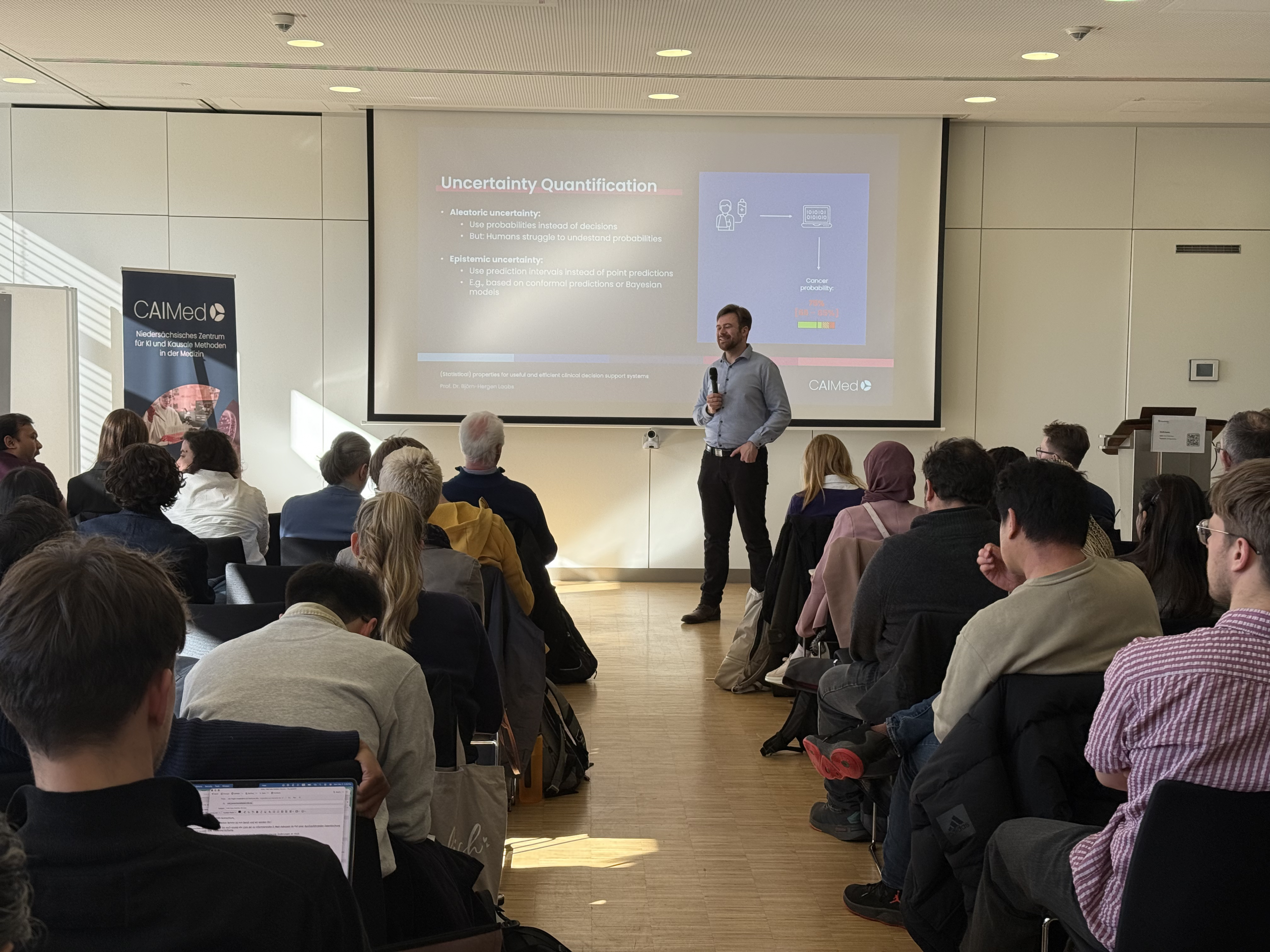
This was followed by Prof. Dr. Björn-Hergen Laabs, Group Lead at CAImed, who presented the statistical properties of efficient clinical decision systems and emphasized the necessary balance between predictive accuracy, interpretability, and the practical applicability of medical AI technologies.
After a short coffee break, Prof. Dr. Mehul Bhatt from Örebro University spoke about foundations of responsible AI for next-generation neurocognitive technologies. His presentation focused on ethical design principles, system robustness, and the societal implications of AI-based technologies in sensitive application areas.
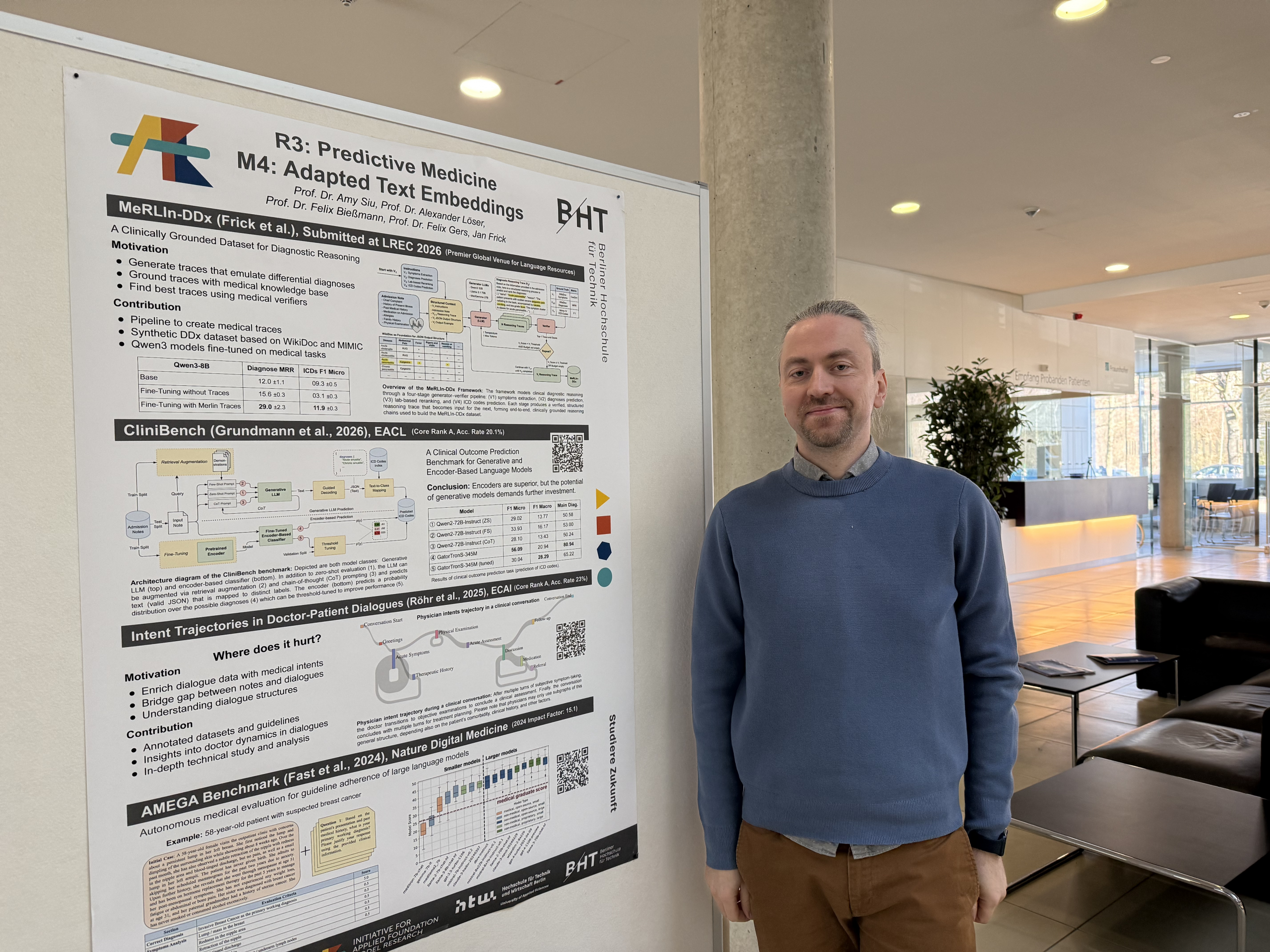
The session continued with a panel discussion and a poster session, during which additional research projects were presented and discussed collaboratively.
Poster Contributions from AI Grid Members
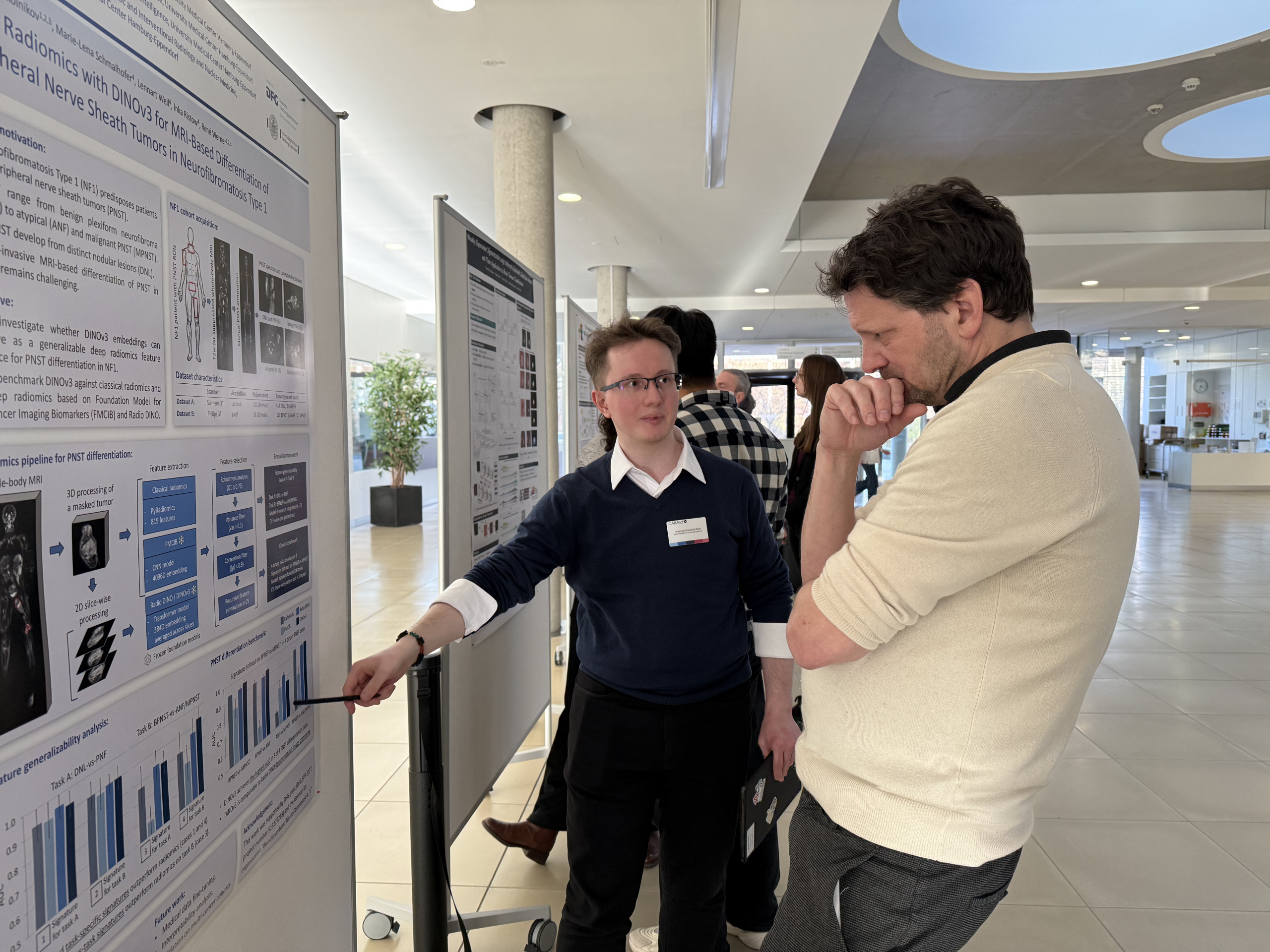
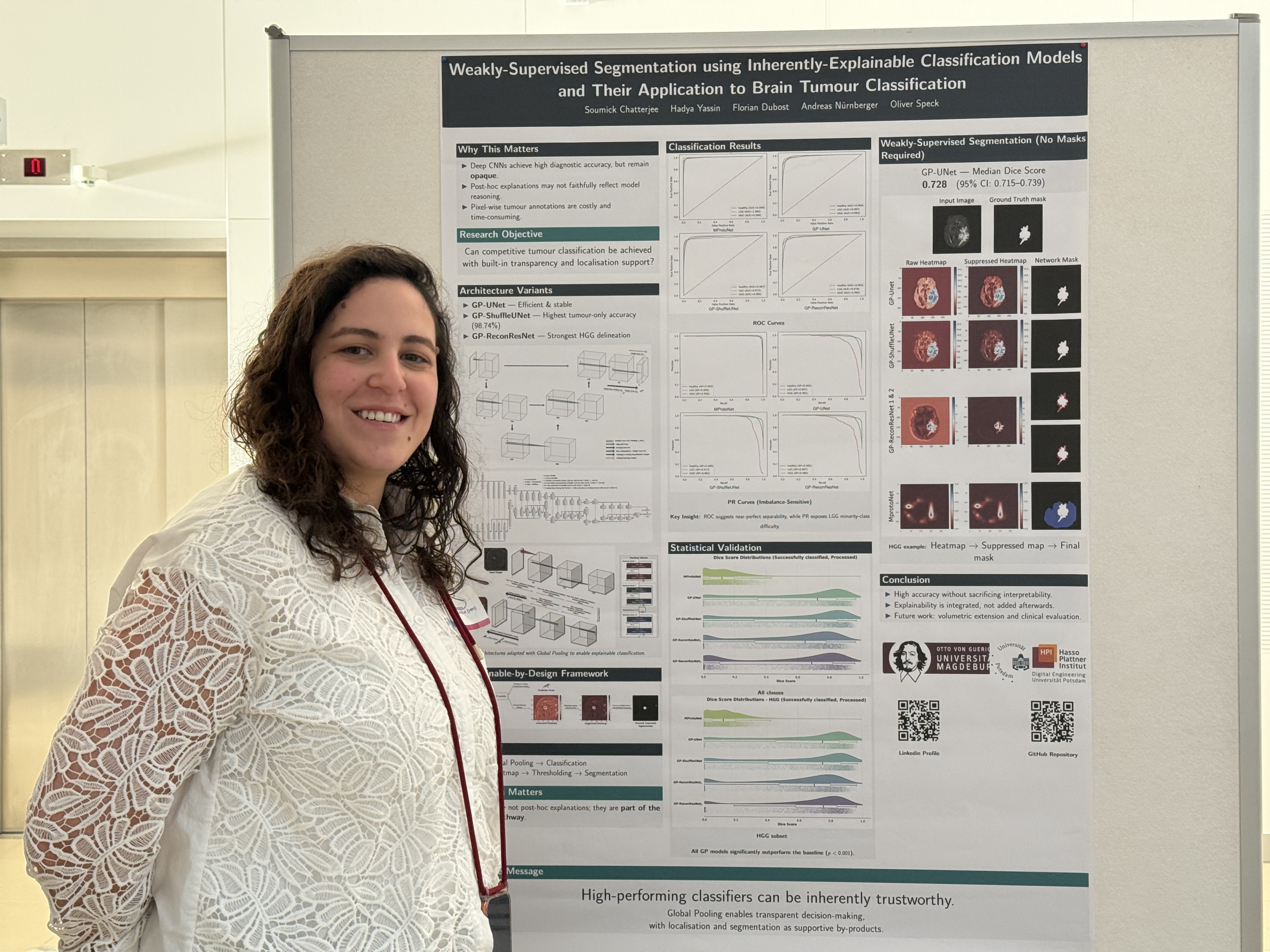
The poster presentations complemented the scientific program:
- Dennis Fast presented work on the trustworthy application of natural language processing for clinical text analysis.
- Georgii Kolokolnikov presented research on deep radiomics using self-supervised vision architectures such as DINOv3 for medical image analysis.
- Erik Voigt demonstrated approaches for unsupervised concept discovery in dermatological applications.
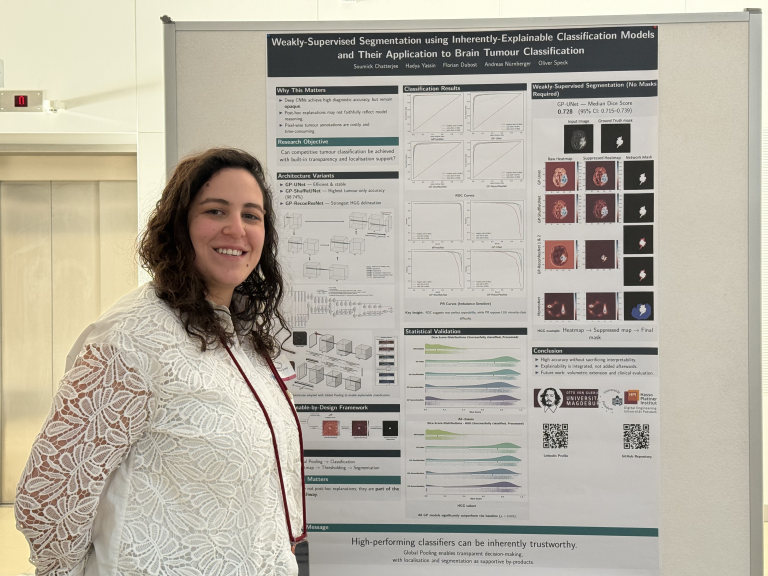
- Hadya Yassin presented weakly supervised segmentation methods for brain tumor classification.
Scientific Networking as the Foundation for Future Innovation
Across all program segments, it became clear that progress in medical AI requires more than optimizing individual model metrics. The discussions highlighted the importance of high-quality data, careful evaluation, and the clinical applicability of algorithmic solutions.
Particular emphasis was placed on the need to connect methodological innovation with the real requirements of healthcare systems. Medical AI unfolds its full potential especially when technological development, clinical expertise, and responsible design work together.
The meetup concluded with extensive networking opportunities that deepened the scientific exchange between AI Grid, the CAIMed community, and additional partner institutions. The visit to Hanover therefore marked not only a scientific trip but also another step toward the long-term promotion of interdisciplinary collaboration in medical AI research.